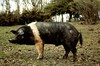
Initially I had intended to photo document the breakdown of the pig, I started out well, but then it just got too complicated and time consuming, it got late, the pig had to be broken down and refrigerated, and basically I didn’t do a good enough job to post it up here. So i’ll go through what I have produced and show as much as I can of the breakdown.
First up: Coppa di testa !
Showing posts with label Cured meat : Salame - Tasting Notes. Show all posts
Showing posts with label Cured meat : Salame - Tasting Notes. Show all posts
Tuesday, August 20, 2013
Coppa di Testa

Friday, November 25, 2011
Salam D’La Duja - Tasting

The Salam D’la Duja has been ready for a little while now, but I haven’t had a chance to post about it. The one pictured here on the left is about 10 months old. I tried some at 4 months and the flavor is pretty similar. This one might be a little more intense.
Sunday, September 18, 2011
Boccia al Finocchio – Tasting

The boccia al finocchio has been ready for a while, but I’m just not getting around to writing about it.
I apparently forgot to take notes on timing so I can’t say how long it stayed in the curing chamber, nor how much loss there was when I took it out! I’m assuming it was 2 or so months and about 35% loss.
Either way, I’ve been enjoying it quite a lot!
It’s got GREAT flavor, but the fennel is not strong enough, in fact, I can barely taste it. It could easily use twice as much next time.
Tuesday, April 5, 2011
Salame di Mugnano – Tasting

This was "head to head" salame making between Scott at Sausage Debauchery and I. We thought through this together and decided to both make our salami then trade to see how interpretations could vary the results.
Wednesday, January 5, 2011
Salame di Capra - Goat Salame Tasting Notes
 The goat salame is ready! They smell amazing. I'm very pleased with how they turned out.
Take a look below for more details on how they tasted.
Wednesday, April 8, 2009
Salame di Brianza - Production and Tasting Notes
 Salame di Brianza is a salame produced in the region of Milan, Lecco and Como. It is actually a DOP product which means in order to use the name it has to follow certain strict guidelines and come from a specific area. Clearly mine wouldn't meet the DOP requirements. It's a very simple salame with just salt, pepper, garlic and wine for flavoring. This is by far the biggest cased product I've made. I made it to use for sandwiches, so I wanted it large to be able to slice it thin and use in a nice ciabatta bread.
Ingredient Quantity(g) % of Meat+Fat Pork ham meat 1270 70 Pork belly (70/30 fat/lean) 544 30 Salt 49 2.7 Cure #2 4.54 0.25 Dextrose 9 0.50 White pepper (whole) 5.45 0.3 White pepper (ground) 0.6 0.03 Garlic powder 1 0.06
F-LC starter culture1 0.06
I basically forgot to take pictures of each step, so you should refer back to any of the other salami, such as the latest one : Salame di Sant'Olcese.
I ground the meat using the large kitchenaid grinder plate, which is 3/16". I used the same method as the other salami I've previously made: cube meat, cube belly, mix with spices, chill way down, grind, then add starter culture diluted in distilled water, and mix until a good bind is formed. This is the spice mix I used in the salame. Nothing too exciting, just looking for a nice porky, tasty salame.
 This is the mixture cased. It's a 100mm collagen casing. It's huge, and this "chub" held all of the mixture; 4 lbs of meat! Packed it in as tightly as possible, but I could tell this was going to be a challenge to get in there without air pockets.
 Just like for other salami such as the Chorizo, this one was sprayed with M-EK-4 mold. It was incubated for 72 hours at 70 deg. F. I incubated about 24 hrs longer than other salami because of it's size.
This picture shows the salame after 24hrs in the fermentation box.
Nice mold!
It was then put into the curing chamber at 54 deg. F and 70-75% RH.
It was at 70% at the beginning, then I raised it to about 75% to try and slow the drying. Here is the salame, cured and ready to eat. It cured just about 2 months, and lost 38.7% of it's weight. It could easily have gone longer, but I wanted a salame that's pretty soft, it makes for better sandwiches since it feels moister.
 Here is the salame sliced. It's got a great texture, and fat distribution, but you can see exactly what I was concerned about above regarding the pockets of air. You can see them in the picture pretty clearly. This is a concern because it can cause problems in the aging, oxidation on the inside and potentially spoilage.
Fortunately there was no spoilage, just some oxidation flavor, so i'm still going to eat it. The oxidation is, luckily, limited and the flavor isn't impacted much at all, especially if you eat this with a nice piece of bread. Just another picture from a little further away. I figured you can't have too many pictures of cured meats.
Overall i really like this. It's REALLY convenient for sandwiches, the taste is great, just porky and meaty. It has a nice flavor without it being tangy. I'm really liking this lower temperature, slower fermentation. It could probably use more pepper, and a little more garlic, and I also realized i forgot to add wine. Oops!
As far as the air pockets, I think next time i'll grind the meat finer. It seems that the larger cased salami always have a finer texture. I'll also mix it more and try to get a better bind. Other than that, i'm not sure what else I could do. I tried to be careful when casing it, and packed it in as I went, but i guess I didn't do a very good job at it!
So, overall this salame is a winner. Good flavor, good texture, needs a little more pepper, a solid B.
Sunday, February 22, 2009
Chorizo - Tasting Notes
 The chorizo is ready! Well, it was ready last week, but I'm just getting around to writing about it now. This is the 1st one I've taken out. It's the one that was cased in an artificial round, 43mm casing. It lost about 43% of it's weight. I've left the others in the curing chamber to lose more weight. I think chorizo needs to be pretty hard. This one was a touch too soft really.
 As you can see, the fat is nice and distinct. There is the correct amount of it, and it is well dispersed.
The flavor is good, but not great. It is a bit too strong on one or more of the flavorings. I'm still trying to work out which. I think it might be too much garlic, and possibly too much smoked paprika.
The black pepper is right. A friend of mine, who knows Spanish chorizo better than I do, says the black pepper is too prominent, and the garlic is correct. Maybe I'm just used to more Italian salami. Either way, I do like it, and would make it again, but reducing the garlic by about 20%, and maybe reducing the smoked paprika by about 15%, and replace that with a hot paprika. It does need some more heat, the cayenne wasn't enough. The salt is correct, it's nice and
savory.
I'm looking forward to trying the ones that i've left in the curing chamber. I think they'll be nicer with some "heavier" chew to them, and with the added time in the chamber, maybe the overly strong notes will mellow out. The mold as you can see did its job. The salame is nicely covered.
I would grade this a C+ for my tastes. Good, but needs work. Not that it's surprising. I've never made this before, and just took a number of recipes that sounded good, and mashed them together:)
Wednesday, February 11, 2009
Salame di Sant'Olcese - Tasting Notes
 It may not seem like long enough has passed from the posting of the recipe for the salame di Sant'Olcese for it to be ready, but that's only because i've been sitting on the recipe for a couple of weeks! Anyhow...it's ready. Or at least, i've taken one of the 3 that I made out of the curing chamber out.
I took one out pretty early, as I wanted to keep this salame pretty soft. By weight, it "claims" to have lost about 43% of it's weight, over 20 days. I say "claims", because it feels rather soft, and i'm wondering if I mis-weighed them when i put them into the curing chamber...all other salami that i've made before felt considerably harder, at less water weight loss. Either way, I felt like eating one.
As i've said, it is quite soft. Maybe a tiny bit too soft, it probably could have used another 4-7 days, good thing I have 2 or 3 more in the curing chamber. If i were to compare it to something in softness, the first thing that comes to mind is a marshmallow, maybe a little bit harder. As far as the tasting goes, it's excellent. Really is. The pepper is quite pronounced, it's nicely salty, and the garlic is there in the background. It is not sour at all, which is nice, as I don't care for the San Francisco style of cured meats that are prounouncedly sour. I think it's because of the starter culture i used, and becuase i ferment at a low temperature (70F).
The fat is distinct, and is in perfect proportion to the meat. The salame so far does not present any air pockets. Overall I'm really pleased.
Of course, there are some improvements that can be made, there always are. In slicing the salame, one can see, and feel while chewing, about a 1/8" ring on the outer edge which is slightly drier. I attribute this to my humidity not being high enough in the chamber. As such, for the stuff that's still in there, i bumped up the humitiy from about 70% to about 75%. This should also slow down the curing/drying time, which I believe will lead to better flavor as well.
I'd give this salame a solid B+. It's a touch soft, and the dry ring around the edge keeps it from an A :).
Wednesday, May 21, 2008
Salame al Barolo
 While making the salame tipo varzi I also made a salame al Barolo. I actually didn't use Barolo, I used a Cote du Rhone. Basically it is a simple salame mixture to which a relatively large quantity of wine is added. The alcohol and excess water evaporate leaving behind the flavors of the wine used. Since I've never tried this before, I figured I'd give it a shot. Unfortunately things didn't turn out quite as rosy as one might hope.
I'm not going to go into the detail that i've given in the past since I don't think there is much point in repeating stuff. Just know that the method is the same; grind, add seasoning, mix, case, spray with mold, ferment, and then dry.Ingredient Quantity(g) % of Meat+Fat Pork ham meat 750 75% Fat back 250 25% Salt 27 2.7% Black Pepper (cracked) 2.5 0.25% Cure #2 2.5 0.25% Dextrose 5 0.5% F-LC Starter 0.4 0.04% Red wine (Cote du Rhone) 250 25%
Everything was ground and mixed, cased into natural beef middles, and sprayed with a solution (1.5g mold to 27g water) of M-EK-4 mold culture. It was fermented at 71-72 deg. F for 48 hours.
As you might immagine the mixture was quite wet after mixing in the wine which made for easy casing.
The salame was dried at about 54 deg. F / 70% RH for about 28 days, until it had lost 45% of its weight. To the left here is a picture of the finished product, and where I can convey an important lesson.
You can clearly see a fairly sizable "air pocket" that somehow made it's way into the mix. Either there was an bubble in the mix that got pushed into the casing, or the wet mixture left air pockets upon evaporating. I'm not sure.
The problem with this is that it can allow bacteria to grow that could be dangerous. This is something that really needs to be avoided by making sure the mixture is properly compacted and massaged into the casings to force any air pockets out of the mix.
The flavor of the salame while first tasting it was OK. Too winey for my tastes, and just not very exciting. Interestingly, after about a month in the fridge, and retasting, it tasted not so great. It had a very oxidized flavor, which i think might have been caused by the air pockets..but I'm not sure. Either way, it was disposed of.
Wednesday, April 9, 2008
Salame Saturday! - Faceoff: farmer vs. commercial - rematch. - Results
 I know, it's been a long time coming. I'm sure many of you have been wondering what the heck happened since the last farmer vs. commercial post a month and a half ago! Well, it took a good 30 days for the salami to lose about 40% of their weight, so that's where most of the time went. The rest was just my slowness in taking pictures to post!
 You can see here on the left side of the picture is the farmer meat salame, on the right is the commercial meat one.
I made sure to remove them from the curing fridge after they had lost an equal amount of water weight. These were at about 43% loss. The farmer one took a good 7-10 longer to lose that weight than the commercial one. I attribute this to the difference in the intramuscular fat.
The commercial one has an obvious, common, defect. You can see that the meat paste wasn't properly bound before i put it into the casing, which has caused the small "cracks" in the salame, leaving small air pockets. This is a dangerous defect, since air inside the salame can cause problems. It doesn't seem to have affected this one though. I'll definitely mix the meat paste longer next time to get a better bind.
There is an obvious difference in color, i'm not really sure why. The textures are also a little difference. The commercial one is a little tougher and chewier.
What about the flavor? The verdict is in! Let me preface this by saying BOTH are FANTASTIC. By FAR the best i've ever made. I attribute this to the F-LC starter i used this time, as well as the lower (72 deg.F), and longer (48 hrs) fermentation. The flavor of both is just outstanding. It is as good as any available, including the best artisinal ones.
So, which is better. I guess i'd have to give the edge to the FARMER one. It is a little richer and deeper in flavor. The texture is a bit better, but I could probably achieve the same texture by drying the commercial a little less.
Would I keep paying 4 times the cost for farmer instead of commercial based on flavor alone? (ignore the whole animal welfare for now). No. Not for salame. For roasts and grilled meats, hell yes, but I think much of the deliciousness of the pork is lost over the drying and spicing and curing. If I could get farmer pork for a small cost increase, I'd use it, but at current prices which are 3-4 times higher than commercial, I don't think i'll use farmer pork.
On a side note, I sort of accidentally removed one of the farmer salami at about 35% weight loss. It is considerably softer than the 43% loss, and also very good. Which do I prefer? I guess if i were making a sandwich, the softer, moister one, if eating out of hand or as an appetizer; the harder one.
I have one more of each type still drying, i expect them to be at about 50-55% loss right now. I'll take them out in the next week or 10 days, and see what they're like.
Saturday, October 6, 2007
Farmer pork Vs. Commercial pork - Cacciatorino: The Results
 Well, it's finally time for the tasting of the cacciatorino salame. As you may remember the last post was the set up for an experiment. I wanted to see if using farmer raised heirloom pigs would make a difference in the flavor and quality of the salame. The formula was identical for both salami with the only variable being the meat used.
The salami were cured for 12 days at 54 deg. F and about 70% humidity. The Costco salame lost 43% of its weight, and the farmer one lost 40%.
So, is there a difference between the two salami?
The answer to that question is yes, but with qualifiers.
In the picture above are 2 slices of each salame. It is hard to show in the picture, even putzing with it in photoshop (I'll retake them tomorrow in natural light), but there is a visual difference. The farmer one is a lighter shade of red, almost a pink. The Costco is a deep ruby red, which is actually prettier looking. I would attribute this difference to the fact that the farmer pork has more intramuscular fat than the Costco pork.
The mouth feel is also different. The Costco one is a little chewier, while the farmer one is a bit softer and more tender. This is probably due to the fact that the farmer one lost a little bit less water. I prefer the chewier Costco.
Aroma. It is very similar for both. Mild, a bit peppery, and very nice.
Flavor. This is where the real differences come to light. I'll say it right out. The COSTCO salame was better. Yes. It was better. 5 people blind tasted both, and all 5 chose the Costco one. I'm rather amazed. The farmer one is considerably more sour. This might be because the breed of pig, or the way it is raised has an effect on the pH of the meat, with the farmer one being lower (more acidic) right off the bat. It is then fermented/acidified the same amount, but if the starting point of the farmer one is lower, the end point would be lower. I'm going to try testing the salame pH with some pH strips to see if it is actually lower, or if I'm imagining it. If it were not more sour the flavors I think would be almost identical (what I'm saying is that the only flavor difference most of us could taste was just the sour).
Now the qualifiers: First, the % weight loss of the two salami was different, not much, but different. I have another pair (1 farmer, 1 costco) still curing, which I'll remove at 49-50% weight loss, and I'll try to make sure they are as close as possible.
Second, I don't care for the products of this particular farmer. I've had their pork chops and was unimpressed. I used them because that is what was readily available for my experiment. I will repeat the experiment using the pork from a farmer I know is fantastic. His pork is so much better and different you'd think it is a different animal altogether. I'll also have to try to make sure the pHs are the same.
So the conclusion to the experiment is that, based on this, farmer pork is no where NEAR worth using at about 6 to 7 times the cost (after scrap and higher initial cost). Now, if you use it because you don't like how factory farms run, then go for it, but this farmer, this time, just wasn't worth it.
Wednesday, September 5, 2007
Salame al Finocchietto - Wow that was quick!
 It's only been 10 days since I put this salame in the curing chamber, but it's ready! I kept the chamber at 56 deg. F and a humidity of about 65%.
As of this morning, the weights of the salami have decreased as follows:
Salame A: 566g -> 321g a 43% loss in weight
Salame B: 596g -> 359g a 40% loss in weight.
So I took salame A, the one which had lost more weight, out of the curing chamber. As you can see there is no mold formation on the outside of my salame. I've never been able to figure this out. I have no idea why. I've even tried spraying the salame with distilled water in which I've mixed a moldy casing from a commercial salame...nothing! I must have a magical chamber which doesn't allow growth.
Anyhow, the aroma is very light, I can smell the fennel, and the black pepper, but not really strong. Cut into it:

You can see the medium fine grain, the nice distinct fat chunks and the black pepper and fennel seeds.
Flavor is very good. Very mild acidity, which is what I was going for, nice fennel flavor, but the black pepper is maybe just a touch too strong. I'd reduce it about 20% next time. Texture was good. A bit drier around the edges than in the middle, but this may change as it firms up after a few days in the fridge. I've found that a week or so in the fridge (sealed in a zip lock bag) allows the meat humidity to equalize across the diameter and the flavor seems to increase.
Overall I'm pleased. Simple flavors, good salame.
Subscribe to:
Posts (Atom)